

 By
By In industrial piping systems, every component plays a role in maintaining safe, efficient, and reliable operations. While valves, pumps, and pipes often receive the most attention, buttweld fittings are equally important. These fittings connect pipes, change flow direction, manage branch connections, and help create a continuous piping network.
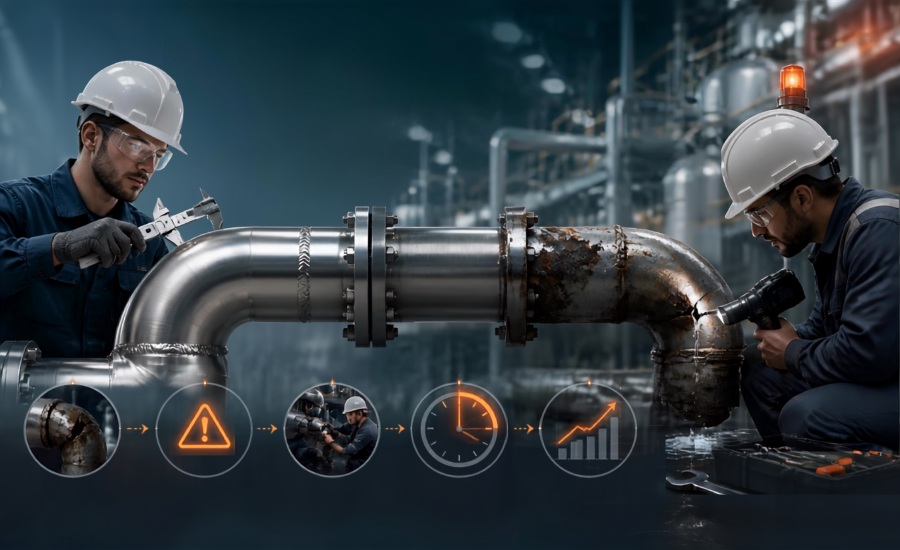
Choosing low-quality buttweld fittings may appear to reduce procurement costs, but the initial saving can quickly turn into expensive repairs, production downtime, and safety risks. The real cost of poor-quality fittings is often hidden until a pipeline is under pressure.
1. Increased Risk of Leakage
One of the most common problems associated with poor-quality fittings is leakage. Inconsistent dimensions, poor surface finishing, inadequate wall thickness, or manufacturing defects can prevent proper welding and create weak points in the pipeline.
Even a small leak can become a serious issue when the system carries high-pressure, corrosive, toxic, or flammable fluids. Besides material loss, leaks can result in equipment damage, environmental concerns, and costly emergency repairs.
2. Higher Maintenance Costs
Low-quality fittings tend to require more frequent inspection, repair, and replacement. A fitting that fails prematurely can force maintenance teams to shut down part of the system, identify the problem, remove the damaged component, and install a replacement.
Over time, these repeated maintenance requirements can cost considerably more than the amount initially saved by purchasing cheaper fittings.
3. Unplanned Production Downtime
For many industries, downtime is far more expensive than the cost of a replacement fitting. Manufacturing plants, chemical facilities, oil and gas operations, power plants, and processing units can lose significant revenue when critical pipelines are taken offline.
A reliable buttweld fitting helps maintain pipeline integrity and reduces the likelihood of unexpected failures. Investing in quality components can therefore contribute directly to better operational continuity.
4. Welding and Installation Problems
Buttweld fittings need to match the connected pipes accurately. Poor dimensional accuracy can create alignment problems during installation, making welding more difficult and time-consuming.
Incorrect bevel angles, inconsistent thickness, or dimensional variations may also affect weld quality. This can increase labour costs and require additional inspection, rework, or non-destructive testing.
5. Compromised Pipeline Safety
Industrial pipelines often operate under demanding conditions involving pressure, temperature, vibration, and corrosive substances. A fitting that does not meet the required material and manufacturing specifications can become a weak link in the entire system.
A failure in a critical pipeline can lead to serious safety incidents, particularly when hazardous substances are involved. This makes quality assurance more than a purchasing consideration—it is an important part of overall risk management.
6. Corrosion and Premature Failure
Material quality matters significantly in industrial piping. Using the wrong grade or poorly manufactured fittings can accelerate corrosion and reduce service life.
The consequences can be especially serious in applications involving chemicals, seawater, steam, hydrocarbons, or other aggressive environments. Selecting fittings manufactured from suitable materials and backed by proper quality controls can help extend pipeline service life.
The True Cost Goes Beyond the Purchase Price
When comparing buttweld fittings, focusing only on the lowest quotation can be misleading. The actual cost should include installation, inspection, maintenance, downtime, replacement, and potential operational risks.
A slightly higher upfront investment in quality fittings can deliver better reliability and lower lifecycle costs.
Choose Quality for Long-Term Performance
For industrial piping systems, quality buttweld fittings are an investment in reliability, safety, and efficiency. Before purchasing from forged fitting manufacturers, businesses should consider material grade, dimensional accuracy, applicable standards, manufacturing quality, testing, certifications, and supplier reliability.
The cheapest fitting may save money today—but if it fails tomorrow, the resulting costs can be many times higher.
In industrial pipelines, the smartest savings strategy isn’t buying the cheapest component. It’s choosing components that perform reliably for the long run.