

 By
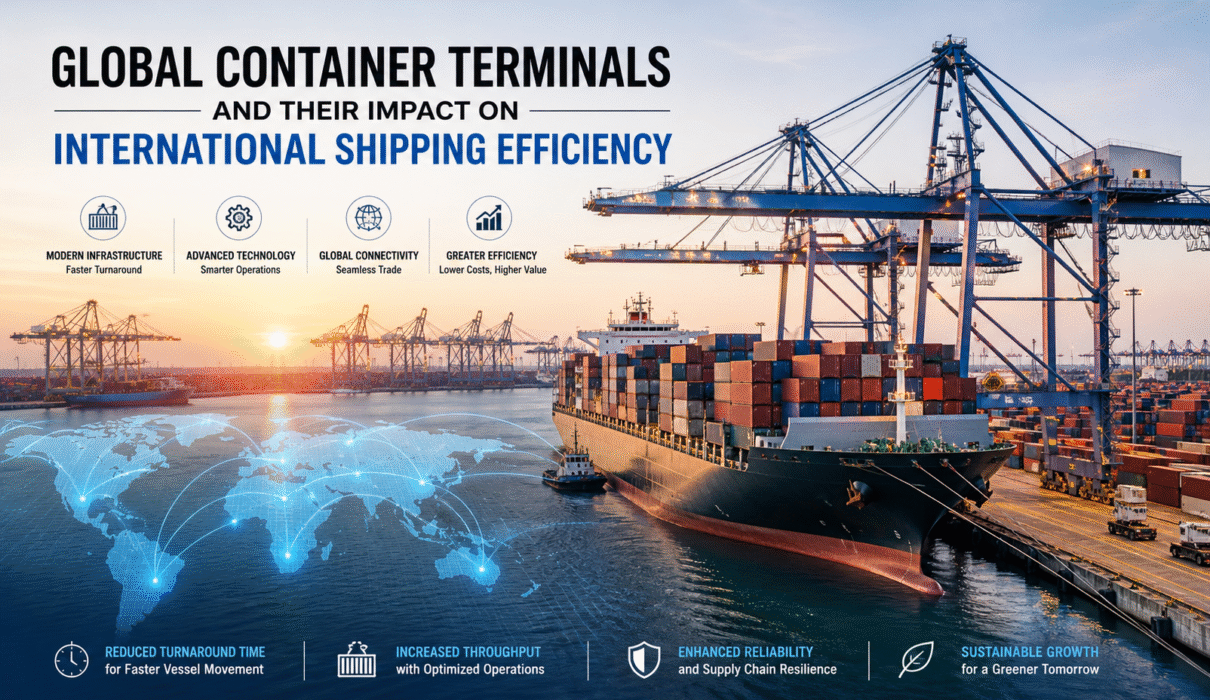
By International trade depends heavily on speed, coordination, and reliability. Every day, millions of containers move across oceans carrying goods that support industries, businesses, and consumers worldwide. At the centre of this complex logistics network are global container terminals, the operational hubs that keep international shipping running efficiently.
From cargo handling and vessel management to customs coordination and multimodal transportation, container terminals play a vital role in ensuring smooth trade movement across borders. As global commerce continues to grow, modern container terminals are becoming increasingly important in improving shipping efficiency and strengthening worldwide supply chains.
Understanding the Role of Global Container Terminals
A container terminal is a specialised facility located at a seaport where cargo containers are loaded, unloaded, stored, and transferred between ships, trucks, and rail networks. These terminals act as the connection point between maritime transportation and inland logistics systems.
Modern global container terminals are designed to handle massive cargo volumes with speed and precision. They use advanced equipment, digital tracking systems, automated cranes, and streamlined operations to minimise delays and improve productivity.
Efficient terminal operations directly impact shipping schedules, transportation costs, and delivery timelines for businesses involved in international trade.
Faster Cargo Handling and Reduced Turnaround Time
One of the biggest advantages of advanced global container terminals is faster cargo movement. Efficient loading and unloading processes help reduce vessel turnaround time, allowing ships to spend less time at ports and more time in transit.
Modern terminals use automated container handling systems, real-time cargo monitoring, and digital scheduling tools to improve operational flow. These technologies help minimise congestion while ensuring containers are processed quickly and accurately.
For shipping companies, reduced waiting times translate into lower operational costs and improved route efficiency. For importers and exporters, it means faster cargo delivery and better supply chain reliability.
Supporting Seamless International Trade
Global trade involves multiple stakeholders, including shipping lines, customs authorities, freight forwarders, transport providers, and warehouse operators. Container terminals serve as the coordination centre where all these logistics activities come together.
Efficient terminal management ensures smoother cargo transfers between sea, road, and rail transportation systems. This integration reduces disruptions and helps businesses maintain continuous supply chain operations.
As international shipping volumes continue to rise, the ability of container terminals to manage cargo efficiently becomes increasingly critical for maintaining trade flow between countries.
The Role of Technology in Modern Container Terminals
Technology has transformed the way global container terminals operate. Many ports now use artificial intelligence, automation, IoT-enabled tracking systems, and smart logistics software to improve efficiency and reduce human error.
Automated cranes and robotic handling systems allow faster container movement while improving operational accuracy. Digital tracking systems provide real-time visibility into cargo location, shipment status, and port activities.
These innovations help shipping companies and logistics providers make faster decisions, improve scheduling, and avoid unnecessary delays.
Technology also enhances security, inventory management, and customs processing, creating a more transparent and reliable logistics environment.
Reducing Port Congestion and Logistics Delays
Port congestion is one of the biggest challenges in international shipping. Delays at ports can impact delivery schedules, increase transportation costs, and disrupt entire supply chains.
Efficient global container terminals help reduce congestion by streamlining cargo operations and improving container flow. Many terminals also work closely with nearby logistics hubs, warehousing facilities, and container freight stations to move cargo quickly away from port areas.
This coordinated approach improves port productivity and ensures smoother transportation across the supply chain.
Supporting Economic Growth and Global Commerce
Container terminals play a major role in supporting national and international economies. Efficient shipping infrastructure encourages trade growth, attracts foreign investment, and strengthens industrial development.
Countries with advanced container terminals often experience better export performance and stronger global trade connectivity. Businesses benefit from reliable shipping services, reduced logistics costs, and faster access to international markets.
As industries such as manufacturing, retail, automotive, and e-commerce continue to expand globally, the importance of efficient container terminal operations will only increase further.
Sustainability and the Future of Container Shipping
Modern global container terminals are also focusing on sustainability and environmentally responsible operations. Many ports are investing in energy-efficient equipment, electric cargo handling systems, and cleaner transportation technologies.
Digital optimisation tools help reduce fuel consumption and unnecessary cargo movement, contributing to lower carbon emissions across shipping operations.
As the logistics industry moves toward greener practices, sustainable container terminals will become an important part of the future global trade ecosystem.
Conclusion
Global container terminals are far more than cargo handling centres — they are the foundation of efficient international shipping and global trade connectivity. By improving cargo movement, reducing port congestion, supporting multimodal transportation, and integrating advanced technologies, these terminals help keep worldwide supply chains running smoothly.
As global trade volumes continue to rise, the role of modern container freight station in driving shipping efficiency, economic growth, and logistics innovation will become even more significant. Efficient terminal infrastructure is no longer just an operational advantage; it is a critical factor in the success of international commerce.